Lever Frame
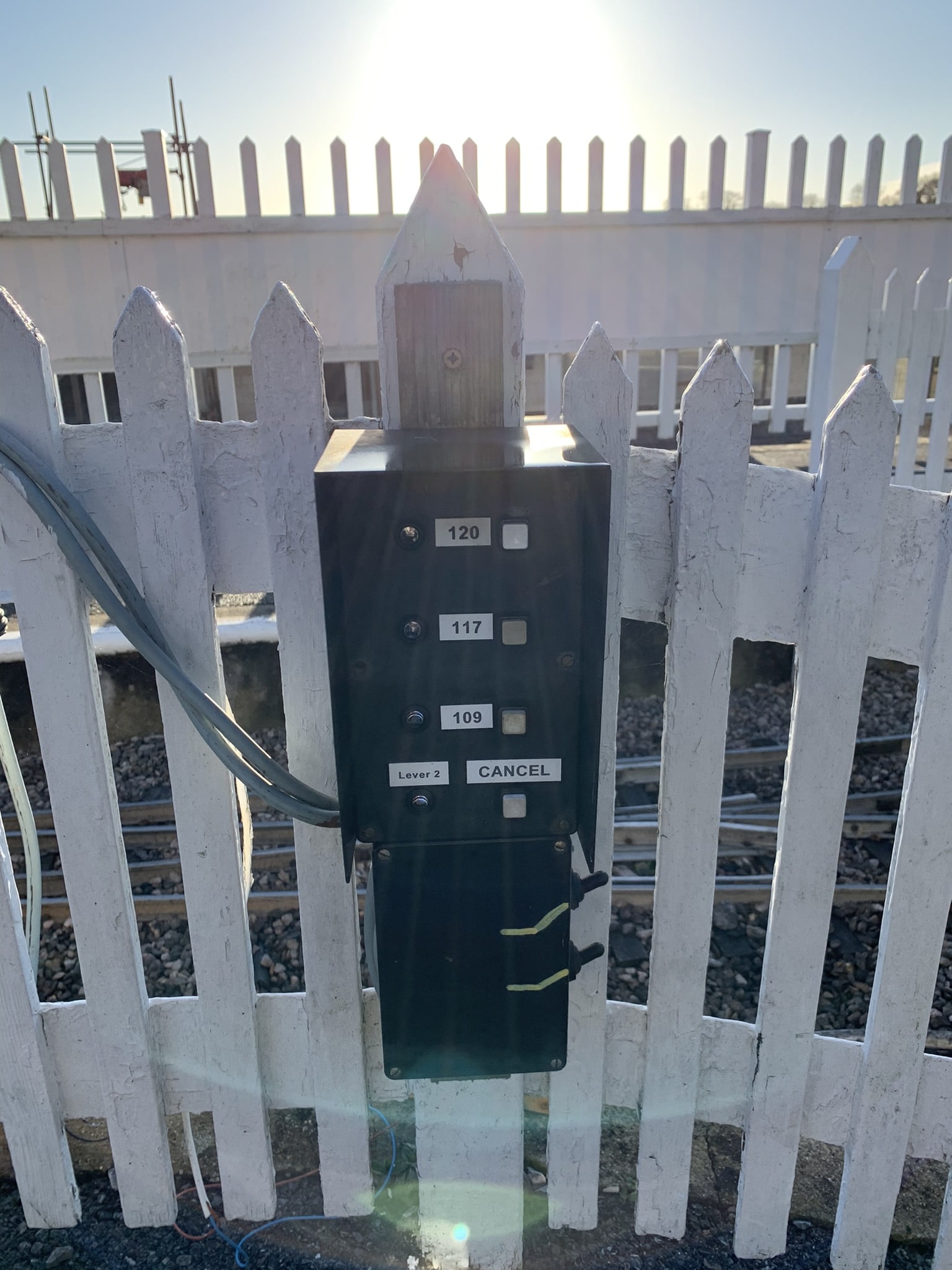
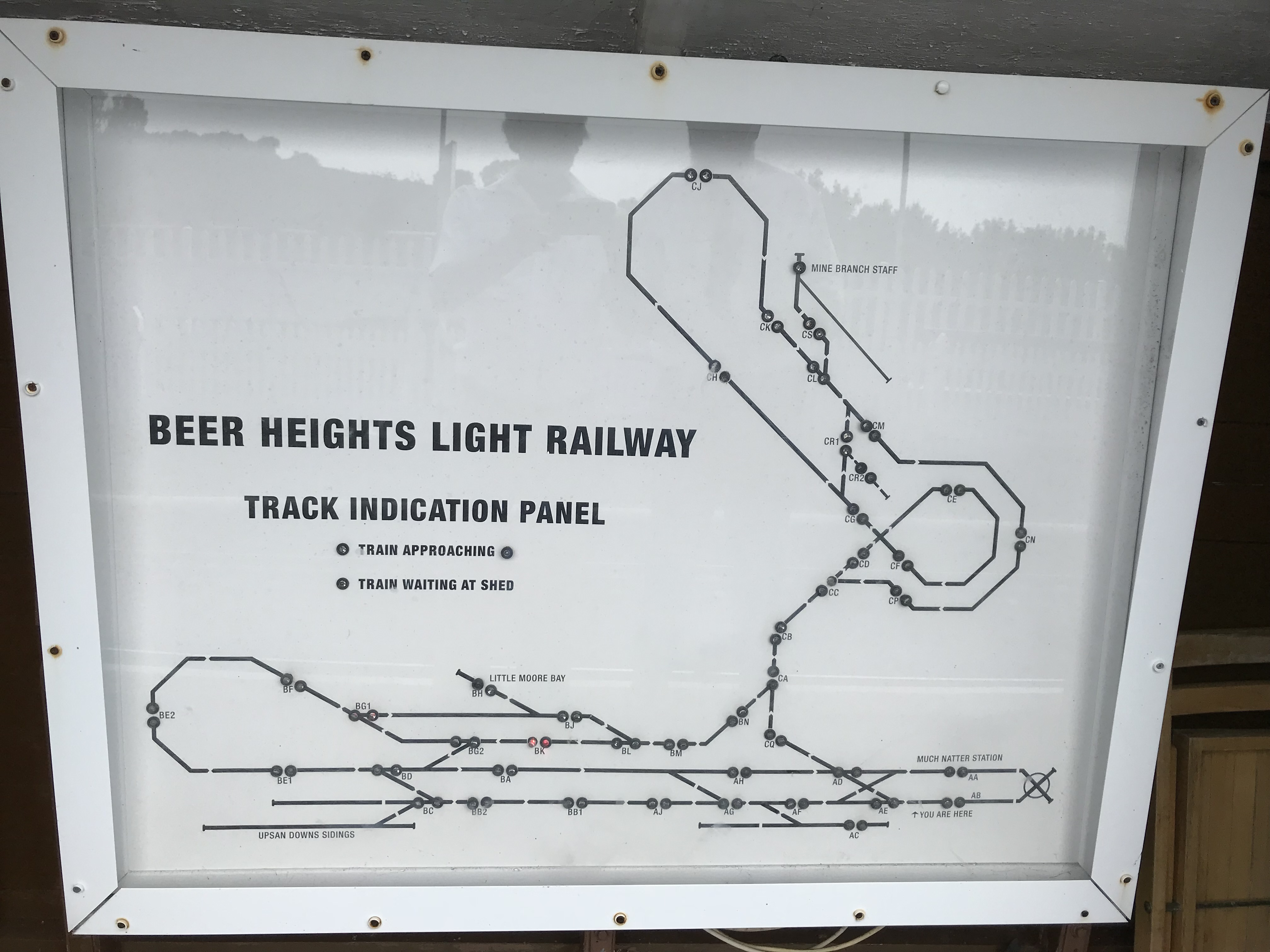
Departure Panel
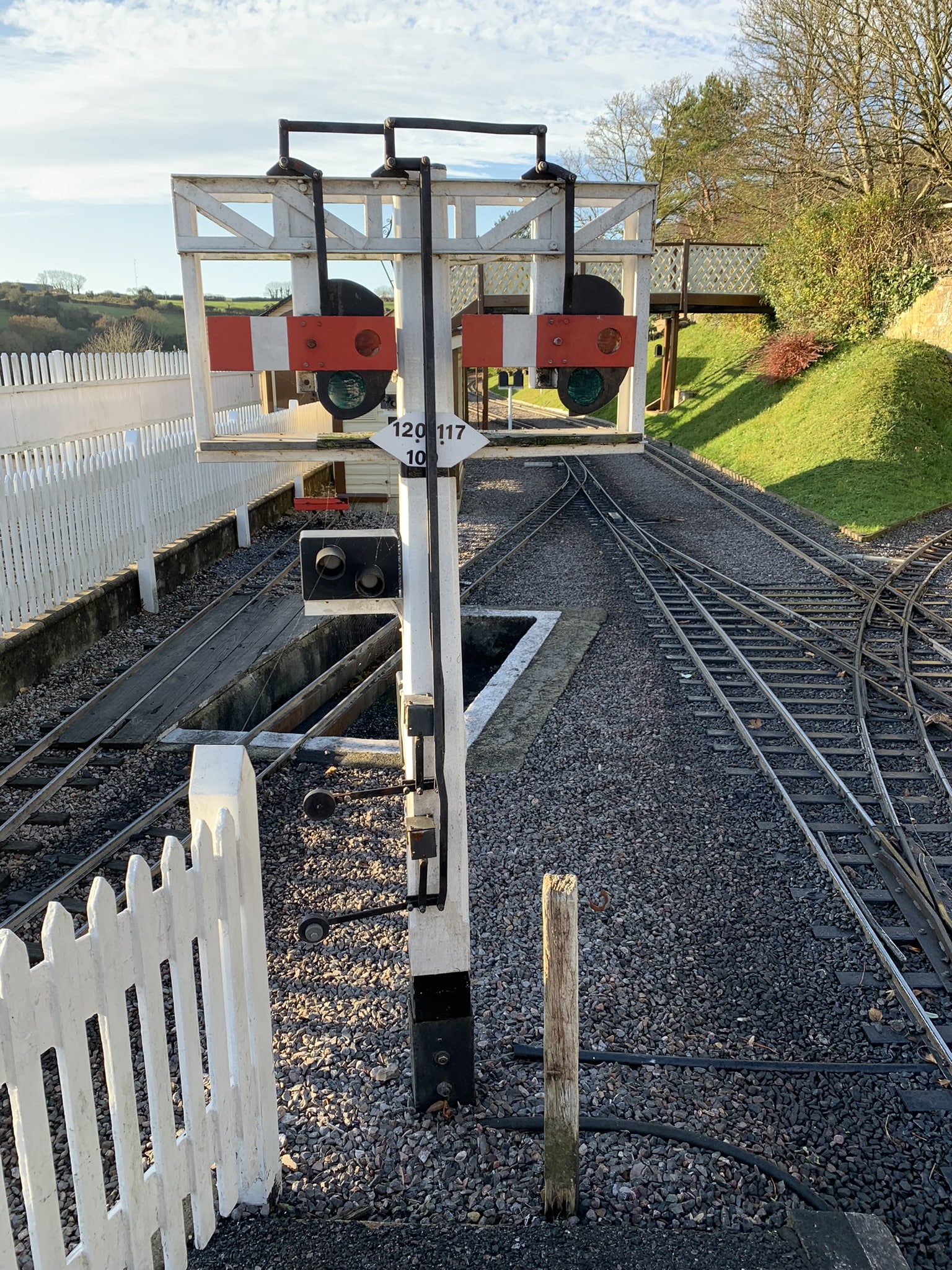
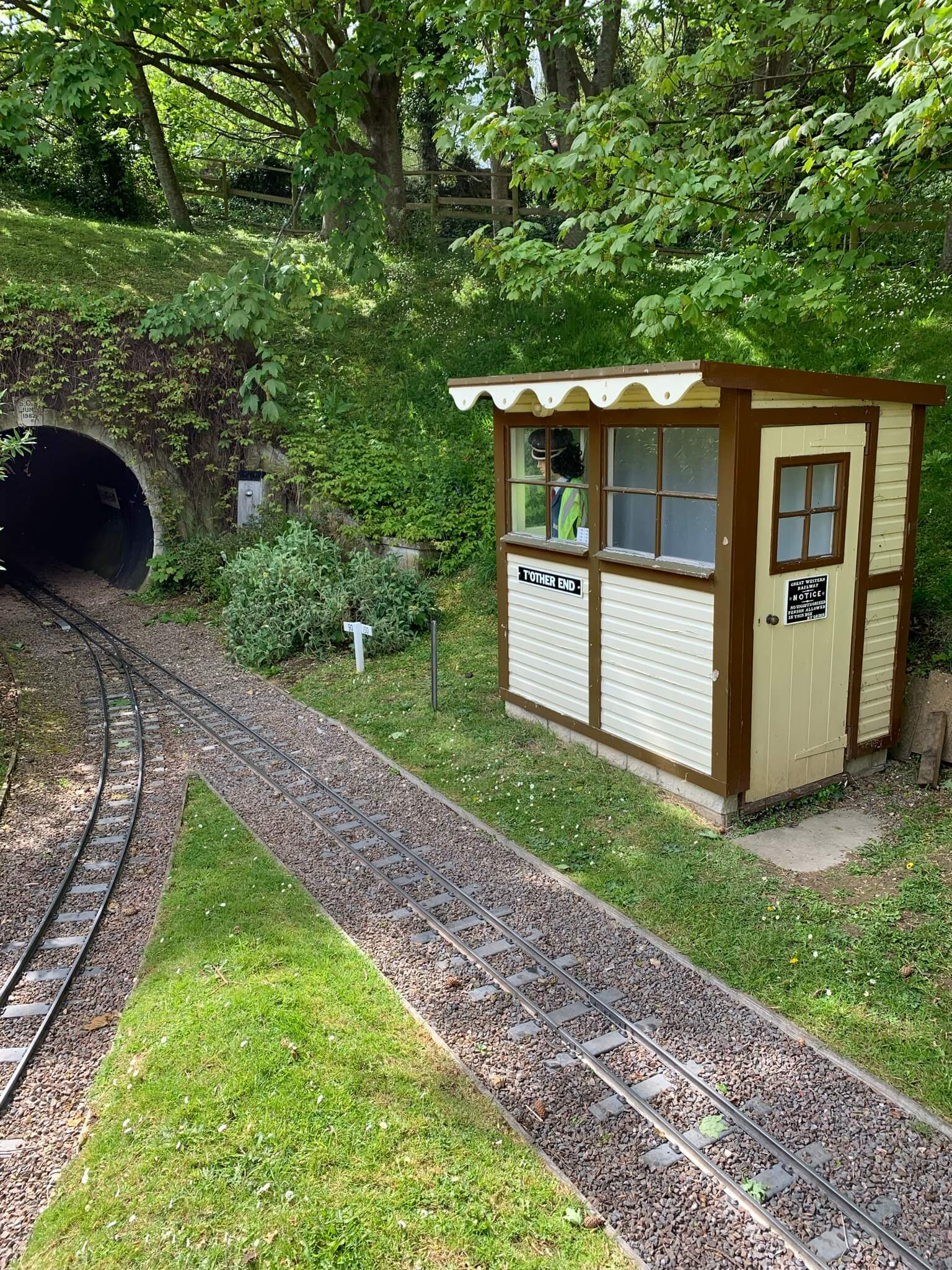
Semaphore Signal
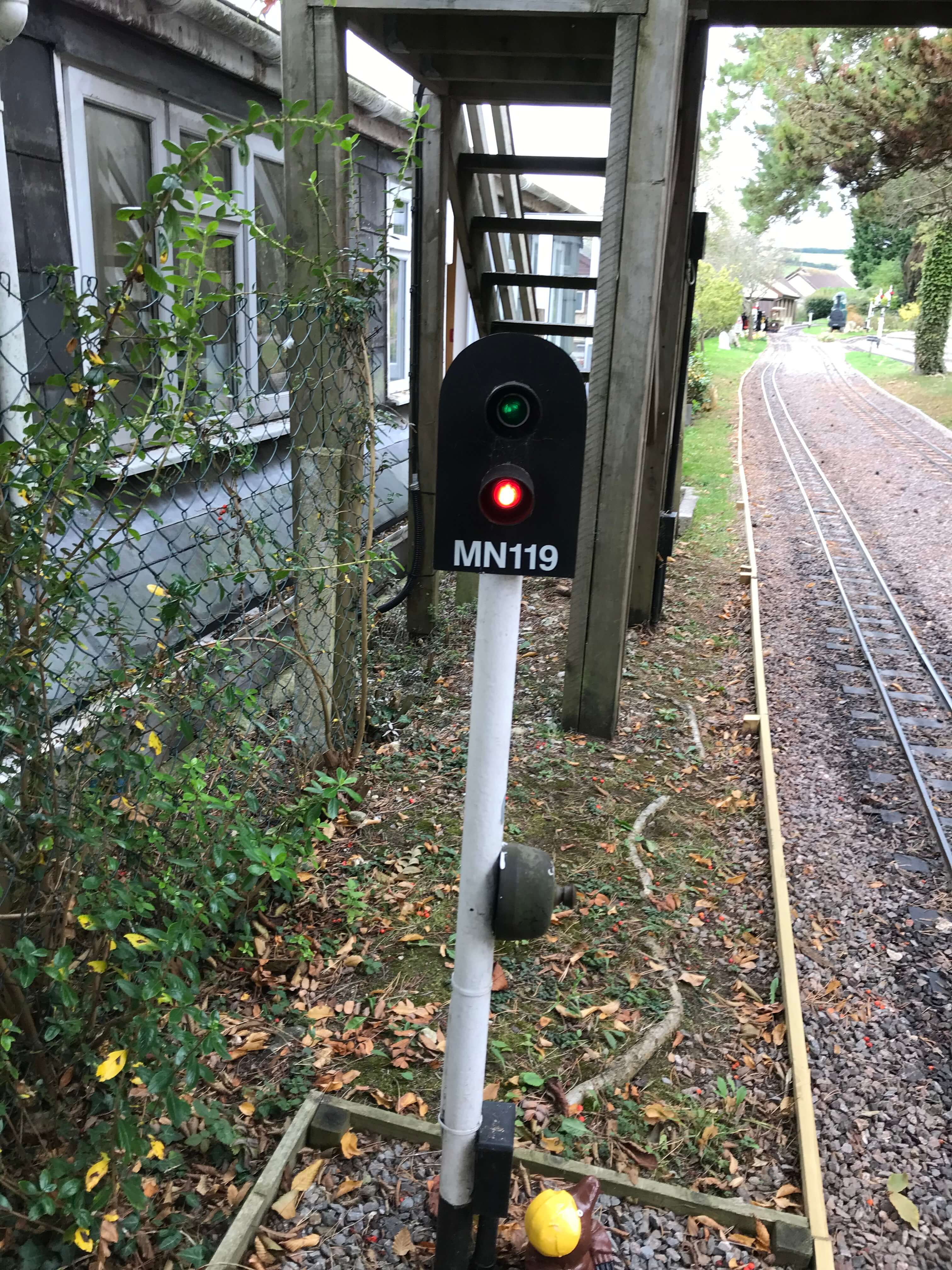
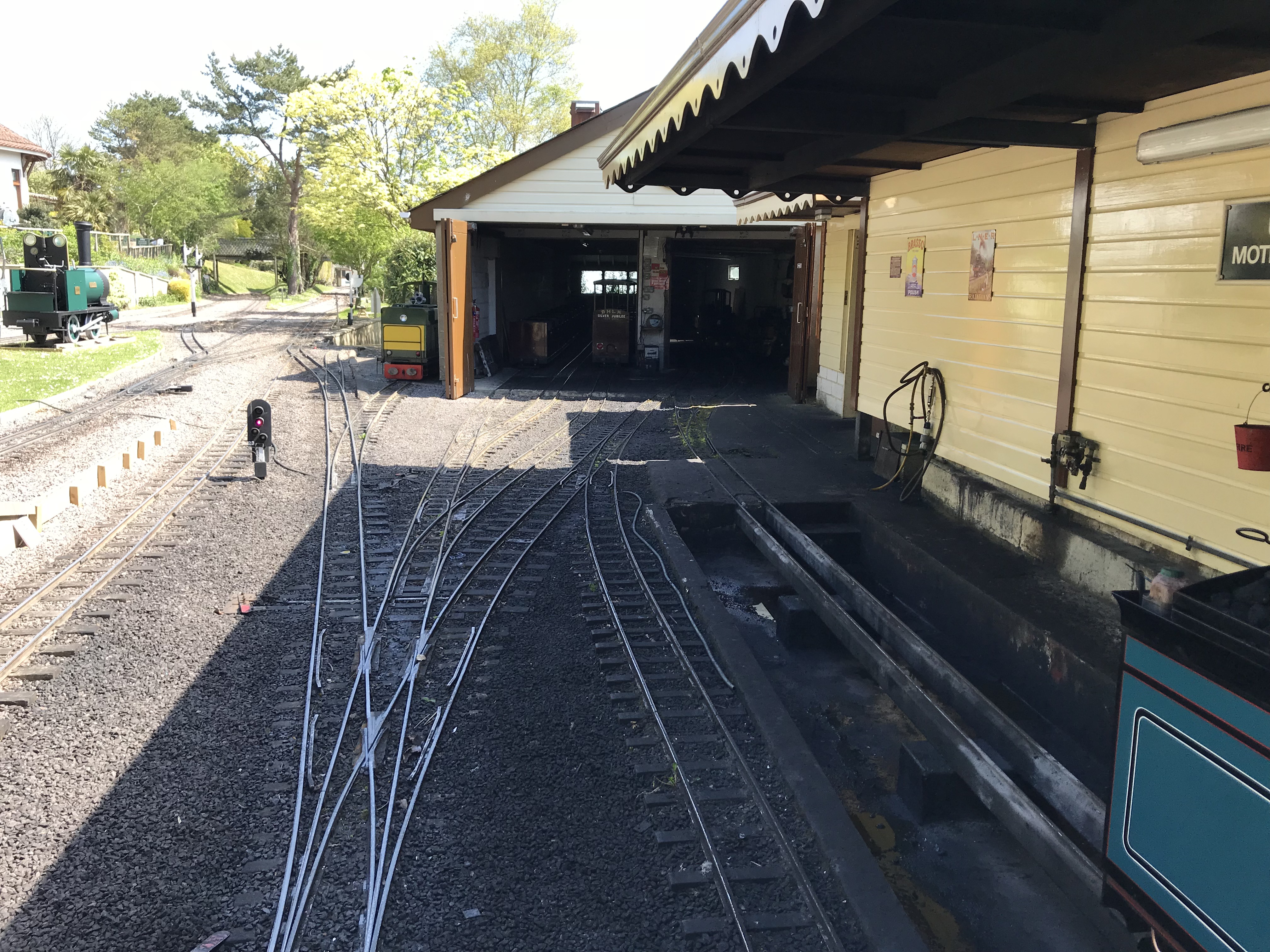
Colour Light
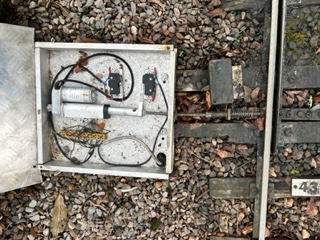
Point Motor
Background
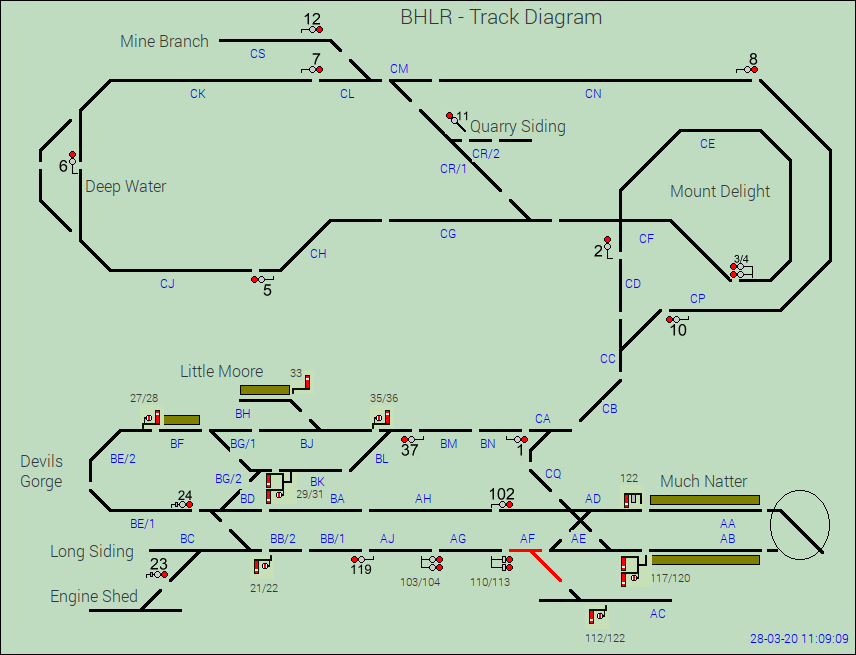
The signalling on BHLR (Beer Heights Light Railway) which is located at Pecorama in the delightful village of Beer in sunny Devon has been developed over a number of years and provides a fully automated fail safe system for the movements of trains around the 1.5 mile circuit.
Trains depart from Much Natter, where the Station Master is required to initiate the departure from either of the 3 platforms using a miniature 3 lever frame and the departure buttons. Once initiated the train will be automatically routed around the system back to Much Natter, where the Station Master will accept the arrival again using the miniature lever frame.
Service trains depart from the Departure platform and can route either via Little Moore (GWR) or straight to Tunnel East (SR). The Bay platform at Much Natter is primarily used to store locomotives when more than 2 locomotives are in use.
A number of driver operated plungers are sited on various signals to allow for shunting and other deviations from the main route:
- Little Moore Bay – Platform used for shuttle service to Wildway Branch
- Non-Stop – Allows for trains to go back to Tunnel East instead of Much Natter
- Wildway Branch – Destination of the shuttle service
- Quarry Siding – Where visiting locos arrive and depart (by road)
- Depot – Engine shed and carriage sidings
There are 2 types of signals:
- Semaphore: Based on GWR lower quadrant signals, where the arm drops to show proceed.
- Colour Light: Based on the BR generic 2 aspect signal.
There are 2 types of points:
- Powered: Used by the interlockings to divert trains at junctions.
- Spring: These divert trains in a fixed direction and when trailed are sprung by the train wheels.
The signalling is split into 3 relay based fail-safe interlockings:
This is the main station from where service trains depart from and return to.
There are 3 platforms:
(1) Arrivals – where trips terminate.
(2) Departures – where trips start from.
(3) Bay – mainly used for locomotives to lay over between trips.
There is a turntable linking the Arrivals and Departure platforms so locomotives can be turned between trips.
This is where the depot is located, which has the engine and carriage sheds.
There are two platforms at Little Moore: White Falls Halt, used as the destination platform for the Wildway shuttle service, and Little Moore Bay, which is the starting point for the Wildway shuttle service.
This is the scenic portion of the railway which is accessed via the tunnel under the car park.
The Wildway branch line, Deepwater loop, and Quarry Siding are located here.
The loop at Deepwater is used to allow trains to pass and take on water if required. The Quarry siding is where visiting locos arrive and depart using the lift to transition from road vehicles to the track.
The prime objective of the signalling system is to safely signal trains around the circuit. To do this the presence of a train or part of a train in each section of track is needed. This is achieved using DC Track Circuits of a similar design to the prototype used on Network Rail.
The track on the running lines is divided into sections using insulated fishplates on one rail. Within each interlocking area the other rail is designated the common rail. A low DC voltage is fed to the isolated rail at one end of the section via a load resistor; the other end of the section is then connected to a Track Relay which is energised by the voltage. When the wheels of a train enter the section, they short the voltage and the track relay de-energises, indicating the presence of the train.
When a route is set its HOLD locking relay is de-energised; this prevents other routes from using the same section(s) of track. When the train has fully cleared the section, the HOLD relay is energised, freeing the section for use by another train.
During normal running the next route is set when the train passes the previous signal and enters the next section.
At convergent and divergent points on the circuit First Come First Served relays are used to control the flow and prevent deadlock.
The tunnel, which has a bi-directional single line through it, is protected by SPAD circuits, which set off an audible and visual alarm if a train passes the protecting signal at danger.
The signalling system is monitored by 2 Raspberry Pi computers which are connected to various relays in the three interlockings. These inputs are logged in daily files which can be used to diagnose anomalies.